Blog
Back Pain After a Wreck: When to Get Checked, and What a Herniated Disk Is
NIAMS says to see a doctor for back pain after a fall or injury, or with numbness, leg weakness or trouble urinating. MedlinePlus says most people recover from a herniated disk with treatment.
Quick answer: See a doctor for back pain after a fall or injury. The National Institute of Arthritis and Musculoskeletal and Skin Diseases (NIAMS) says the same for back pain with numbness and tingling, weakness, pain or numbness in your legs, trouble urinating, fever or weight loss you did not intend. A herniated disk is a disk that ruptures and irritates the nearby nerves, which can cause sciatica or back pain. MedlinePlus says that with treatment, most people recover. If you were in a wreck in Littleton, have it looked at rather than guessing.
When should I see a doctor for back pain?
NIAMS says you should see a doctor if your pain does not improve after a few weeks, or if any of these happen with your back pain:
| What you notice | What it means here |
|---|---|
| Back pain after a fall or injury | NIAMS lists this as a reason to see a doctor, which includes a car accident |
| Numbness and tingling | See a doctor |
| Severe back pain that does not improve with medication | See a doctor |
| Trouble urinating along with back pain | See a doctor |
| Weakness, pain or numbness in your legs along with back pain | See a doctor |
| Fever along with back pain | See a doctor |
| Weight loss you did not intend along with back pain | See a doctor |
For emergencies, MedlinePlus says to call 911 for an injury to the neck or spine, particularly if there is loss of feeling or inability to move, and to go to an emergency department or call 911 for severe pain anywhere on the body.
Why would my back hurt after a wreck?
NIAMS says back pain can come on suddenly from an accident, a fall or lifting something heavy, or it can develop slowly because of age-related changes in the spine. It also says that many factors may be present at the same time, and that sometimes no specific cause can be identified.
It lists these mechanical causes, among others:
- Sprain: an injury to the ligaments that support the spine.
- Strain: an injury to a muscle or tendon.
- Herniated or ruptured discs: an event causing a disc to compress and irritate nearby nerves.
- Fractured vertebrae.
- Spondylolisthesis: a vertebra in the spine slips out of place or gradually moves out of alignment.
Those can feel alike from the inside, and that’s why a real exam matters more than a guess. It also helps if you tell the provider what your back was like before the wreck.
What is a herniated disk?
MedlinePlus explains it in three steps. Your spine is made up of 26 bones called vertebrae. In between them are soft disks filled with a jelly-like substance, which cushion the vertebrae and keep them in place. A herniated disk is a disk that ruptures, which allows the jelly-like center to leak, irritating the nearby nerves. This can cause sciatica or back pain.
You may also hear it called a bulging disk, a slipped disk, a ruptured disk or a compressed disk. MedlinePlus lists those as other names for it. MedlinePlus also says disks break down as you age. Tell your provider what you felt before and after the wreck.
How is a herniated disk diagnosed and treated?
MedlinePlus says your doctor will diagnose a herniated disk with a physical exam and, sometimes, imaging tests. It says that with treatment, most people recover, and that treatments include rest, pain and anti-inflammatory medicines, physical therapy and sometimes surgery.
On imaging, NIAMS says X-rays only show bones and can help diagnose broken bones or fractures, while MRI can help diagnose damage or disease of the soft tissues, such as the discs, ligaments and nerve roots.
What does NIAMS say about general back pain treatment?
NIAMS says doctors treat back pain with various options, including medications, nonsurgical treatments and surgical treatments. Among the nonsurgical steps, it says to:
- use cold packs to help relieve some back pain and hot packs to increase blood flow
- avoid bedrest, limit activities that cause pain, and gradually increase physical activity as tolerated
- get physical therapy to help strengthen the muscles that support the back
- check with your doctor or physical therapist before starting any exercise routine
It lists manipulation of the spine and nearby tissues among complementary treatments that may help relieve pain. For the research, including the side effects, read what the research says about spinal manipulation. NIAMS says surgery may be suggested if all other treatments tried have not relieved your pain.
Where does spinal decompression fit?
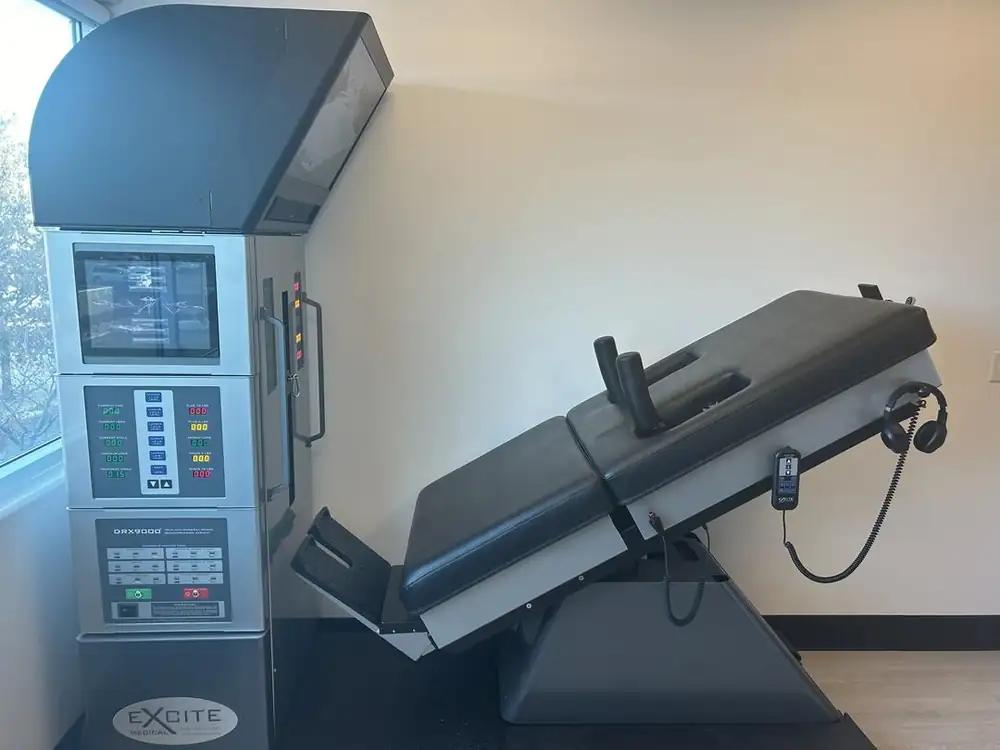
Our clinic has a room set aside for decompression tables, for the low back and the neck, and we offer decompression for disc problems such as bulging or herniated discs. Neither of the sources for this article reports a result for decompression tables, so we won’t promise one here. Whether it fits your case is a decision for your assessment. Ask what the assessment found and why decompression is being recommended. That goes for us too.
How does a visit to our office work?
- A conversation about the wreck, your pain and your health history.
- A thorough assessment of what is going on. Tell us about any of the symptoms in the table above.
- Your options, with time for questions.
- Proper documentation of your injuries.
“I came in after a car accident where I was hit from the side. Back and neck were not in the best of shape,” wrote chuck willson in a Google review. One patient’s experience isn’t a promise of any result.
See how car accident and whiplash care works here, and how medical payments coverage works in Colorado. If your back pain didn’t start with a crash, see back, neck and joint pain care. Then call (303) 980-5699 or contact the office.
Sources
This article is general information, not medical, legal or insurance advice. It is not a diagnosis or a substitute for an examination. If you have an emergency, call 911.
FAQ
Common Questions
Still have questions? Call (303) 980-5699.
Should I see a doctor for back pain after a car accident?
Yes. The National Institute of Arthritis and Musculoskeletal and Skin Diseases lists back pain after a fall or injury among the reasons to see a doctor.
What is a herniated disk?
MedlinePlus says a herniated disk is a disk that ruptures, which allows the jelly-like center of the disk to leak and irritate the nearby nerves. This can cause sciatica or back pain.
Do most people recover from a herniated disk?
MedlinePlus says that with treatment, most people recover. Treatments include rest, pain and anti-inflammatory medicines, physical therapy and sometimes surgery. Your own recovery depends on your case.
More articles
-
Concussion After a Crash: Symptoms Can Start Late
Car accidents are one cause of concussion, and MedlinePlus says symptoms may start days or weeks after the injury. Here is what to watch for, which symptoms are serious and when to get medical care.
Read more -
Hurt in a Crash in Colorado: How Medical Payments Coverage Works
Medical payments coverage pays reasonable health care expenses from an auto accident, regardless of fault. In Colorado, $5,000 is included in your policy unless you reject it. Here is how to check yours.
Read more -
What Does the Research Say About Spinal Manipulation for Back and Neck Pain?
NCCIH says spinal manipulation may lead to small improvements in low-back pain and function, and can help acute neck pain, with caution on the results. Mild side effects are common. Serious ones are very rare.
Read more
Get In Touch
Ready to Get Started?
If this sounds like your situation, we can help.